



  1. Posts/

Failure of a 'good' cholesterol protein that predisposes to cardiovascular risk identified

·7 mins·
Notaspampeanas
APOA1 Self-Association Lipid-Free APOA1 APOA1 Oligomerization APOA1 (P.K131del) Protein Lipid Interaction Cross-Linking LC-MS High-Density Lipoprotein (HDL) Institute of Biochemical Research of La Plata CONICET-UNLP
Notaspampeanas
Author
Notaspampeanas
Digging on curiosity and science.
Table of Contents

An international collaboration with the participation of specialists from CONICET - Argentina discovered a defect in the structure of a mutation that until now had always been sought at the level of its operation

From left to right: Alejandra Tricerri, Ivo Díaz Ludovico, Marina González and Nahuel Ramella, authors of the scientific novelty. Image credit: CONICET Photography/ Rayelen Baridon

High blood pressure, high triglycerides and cholesterol, smoking, obesity, among others. They are the main factors related to atherosclerosis, a disease that leads to the formation and accumulation of fatty plaques in the arteries, gradually causing them to narrow and harden, leading in turn to obstructions or blockages of blood flow. What’s next? Heart attacks or strokes.

Beyond the habits and behaviors that can be detected and reversed, some of the causes are silent and capable of going unnoticed for a long time, only to become evident with a devastating and almost always irreversible event. This is the case of congenital traits, those characteristics or anomalies present from birth, and which often hide possible risks of various kinds. The possibility of understanding them in order to control or stop them is a question that excites scientists from all over the world, and these days an Argentine team celebrates an important finding achieved together with American colleagues and published in the Journal of Lipid Research.

Dedicated for many years to studying a variant – or mutation – of the APOA1 protein, the main component of the high-density lipoprotein HDL, better known as “good” cholesterol, the authors of this new research still did not discover where the fault that made it pathogenic, that is, capable of causing diseases, was. Because there was and is no doubt about that: the percentage of the population that carries this mutation develops cardiovascular complications such as atherosclerosis in early stages of life.

“From the time it was discovered in 1982 until now, it has not been possible to decipher the underlying cause that connects this mutation to the symptoms observed in patients,” said Ivo Díaz Ludovico, a CONICET fellow at the beginning of the research, and Marina González, a researcher at the organization, both at the Institute of Biochemical Research of La Plata (INIBIOLP, CONICET-UNLP).

The protein mutation is linked to a greater predisposition to suffer from cardiovascular diseases at an early age. Image credit: CONICET Photography/ Rayelen Baridon

While most scientific studies on the subject focused on thoroughly reviewing the functions of this protein, Díaz Ludovico and colleagues shifted the focus to its structure, and it was only then that, after subjecting it to a combination of advanced biophysics techniques and classical analyses, they detected the alteration that, they argue, would be the hidden cause of the failure in its functioning. According to González, “in the INIBIOLP laboratory, only some aspects of the function of the mutated protein had been studied and we had observed that it could not remove cholesterol from cells as the normal protein does.”

“The primary function of APOA1 is reverse cholesterol transport, a process in which HDL picks up lipids accumulated in the arteries and carries them to the liver for excretion. It is an essential mechanism to prevent atherosclerosis,” explained Alejandra Tricerri, CONICET researcher at INIBIOLP. “When this variant of APOA1 was detected, which has a relatively high population incidence, laboratory studies began to find the problem in its functionality, but the results were mixed: sometimes it interacted incorrectly with certain enzymes, in other reports a different part of the biological process was altered, but not always. And that’s why Ivo came up with the idea of analysing what was happening in the structure of the protein itself” Tricerri added.

Currently, the reference techniques for the structural study of proteins – specifically X-ray crystallography or nuclear magnetic resonance – cannot be applied to APOA1 due to certain intrinsic limitations of the molecule. The INIBIOLP team then set out to develop different strategies and test other methodologies never before used to study this variant.

Thus, Díaz Ludovico contacted the Department of Pathology and Laboratory Medicine of the University of Cincinnati, United States, a research space with vast experience in the study of structural problems of proteins, where they put into practice a chemical crosslinking followed by mass spectrometry, through which they were able to detect that the structure of this variant of APOA1 was abnormal compared to the native protein. that is, without the mutation.
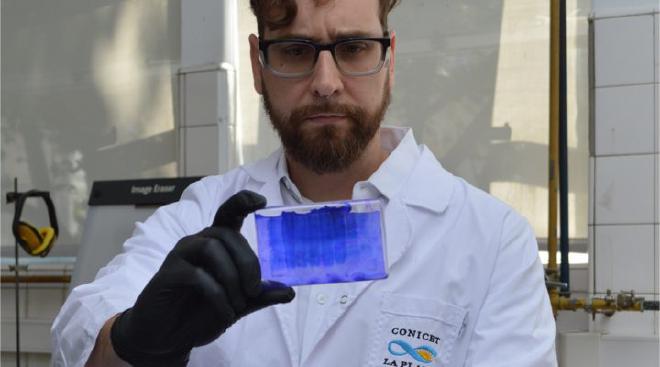
Ivo Díaz Ludovico in the INIBIOLP laboratory, where the idea of ​​​​searching for the failure at the level of the protein structure was conceived. Image credit: CONICET Photography/ Rayelen Baridon
Ivo Díaz Ludovico in the INIBIOLP laboratory, where the idea of ​​​​searching for the failure at the level of the protein structure was conceived. Image credit: CONICET Photography/ Rayelen Baridon.

“The most important flaw was seen in its interaction with more APOA1 molecules, that is, its self-association, a fundamental aspect for this protein,” stressed Díaz Ludovico, and stated that “in its monomeric structure, that is, when it is alone, it already presents aberrations, that is, important anomalies. Although this does not explain its pathogenicity per se, it is a strong indicator that the dysfunction would be at the level of the structure.”

The team has some hypotheses about what might happen next, although he clarifies that studies are still needed to prove or disprove them. On the one hand, they suspect that the protein in this state could be more prone to an uncontrolled interaction and, on the other, that it would not achieve the proper shape it needs to have to fulfill that function of “good” cholesterol.

“This deficient interaction with itself could lead to anomalous aggregations, a species of seed that from its origin is incapable of generating functional structures,” explained Tricerri. The second hypothesis, on the other hand, has to do specifically with the transport of cholesterol accumulated in the arteries, which the “good” cholesterol encompasses to carry to the liver. “The empty HDL is shaped like a disc and, when loaded with lipids and fats, it is filled and acquires a spherical format to transport as much as possible. But this phenomenon depends on the self-association of APOA1 during the process and, if that was deficient, it is likely that the appropriate shape or size of HDL will not be reached for correct removal,” added Díaz Ludovico. One point highlighted by the authors of the research is that this protein has many other known mutations, some pathological, and that normally repeat patterns, so discovering the problem in this particular variant could serve to explain the cause of other health problems.

Cardiovascular diseases are one of the leading causes of death in the world and, as already mentioned, their progression is slow and silent. Most of the reports of this variant of APOA1 correspond to people who have advanced atherosclerosis at a young age and without having risk factors such as obesity or hypertension.

“Unfortunately, today the incidence of this variant in Argentina is not known and, when a symptom is detected, medication is indicated but the deep causes are not studied at the level of cell biology, as in this case,” said Tricerri, while Díaz Ludovico added: “Knowing the explanation of a pathology allows us to understand why something is wrong, but also the reasons that underlie the good functioning, then these conclusions can have translational relevance, that is, applicable to clinical medicine, and become concrete contributions to the development of new diagnostic and therapeutic tools”.

Citation
#

  • The study The congenital APOA1 K107del mutation disrupts the lipid-free conformation of monomeric APOA1 and impairs oligomerization was published on the Journal of Lipid Research. Authors: Ivo Díaz Ludovico, Marina C. Gonzalez, Horacio A. Garda, Romina F. Vázquez, Sabina Maté, María A. Tricerri, Nahuel A. Ramella, Shimpi Bedi, Jamie Morris, Scott E. Street, Esmond Geh, Geremy C. Clair, W. Sean Davidson & John T. Melchior.

Contact [Notaspampeanas](mailto: notaspampeanas@gmail.com)


Related

Why some volcanoes don’t explode
·5 mins
Notaspampeanas
Volcanoes ETH Zurich
Theia and Earth Were Neighbors
·6 mins
Notaspampeanas
Planetary Science Geochemistry
Pampean Cultural Agenda: November closes with a diversity of proposals
·7 mins
Notaspampeanas
La Pampa Cultural Agenda
La Pampa: Comprehensive activities to raise awareness about Diabetes
·4 mins
Notaspampeanas
La Pampa World Diabetes Day
September is Healthy Aging Month
·3 mins
Notaspampeanas
September Healthy Aging Month National Institutes of Health
La Pampa: Prevention of Child Labour: day of awareness and debate
·2 mins
Notaspampeanas
La Pampa Prevention of Child Labour Labor Relations