


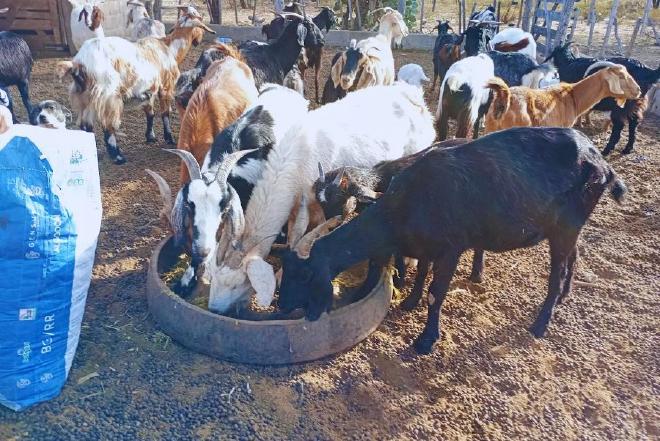
For example, goats naturally have two calving times in the province of La Rioja, Argentina: at the end of spring and the beginning of summer, when calving is generally uniparous and occurs when the natural forest has growing vegetation. The second calving occurs between late autumn and mid-winter, which occurs in many cases multiparous and occurs at a time when the forest is without growth.
This last situation generates problems in the production systems, which produces significant losses for the sector. For this reason, the INTA La Rioja team works together with goat producers in the incorporation of strategic supplementation in goats during the last third of gestation and in the lactation period.
Rebeca Méndes -INTA La Rioja extensionist- stressed that “by supplementing, the birth of goats with a higher weight and better milk production is achieved in supplemented goats, which results in goats with commercial quality in an average period of between 35 and 45 days in the winter period.”
The INTA research team proposes numerous alternatives to supplement these animals in order to ensure a desired growth in the offspring without a marked decrease in the body condition of the mother goats.
“These species mainly provide protein. One to two kilos of stalks can also be incorporated into this diet, which mainly provide vitamins, minerals and water,” Méndez clarified.
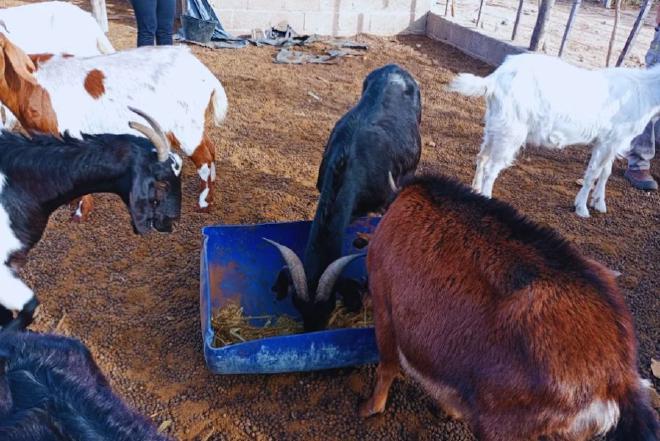
General Recommendations for Supplementation #
First, “separate the animals to be supplemented, if there are marked differences in size or ages, make subgroups to get everyone to eat similar amounts. Also, always deliver the supplement in troughs to avoid loss of material or contamination,” explained Méndez.
The feces of the supplemented animals must be observed and it be restrict feed in case of diarrhea, as well as have water availability since some supplements can generate greater fluid consumption in goats.
“You have to take into account that by supplementing I am giving the animal part of the total food that it is going to eat, so I must let them graze for the same hours as the animals that I do not supplement,” the extensionist said.
INTA’s technical teams carry out different experiences of strategic supplementation in the field of producers in the Chamical area with corn and alfalfa pellets, in the area of El Portezuelo with zampa and corn and in the area of San Martín, in turn, tests of the sorghum silo with corn had just began.
Contact [Notaspampeanas](mailto: notaspampeanas@gmail.com)