


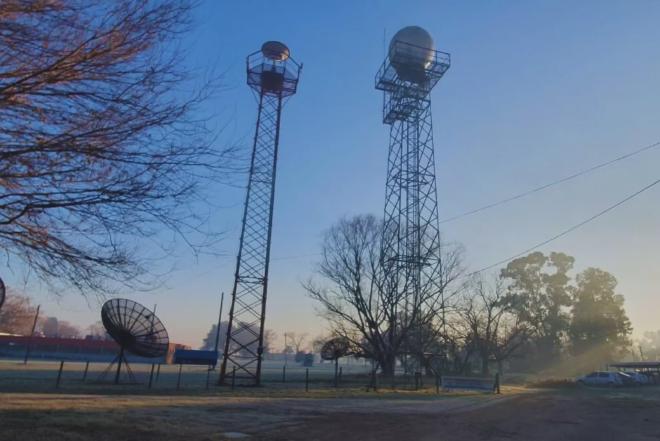
INTA’s web platform **Satellite Tools for Monitoring Agricultural Production** (SEPA) incorporated a new product that significantly expands the analysis of the state of vegetation on a national scale. This is the duration of the negative anomalies of the NDVI vegetation index, a tool that incorporates the temporal variable, which makes a difference and provides a more precise reading for making productive decisions.
As explained by María de los Ángeles Fischer, researcher at the Institute of Climate and Water at INTA Castelar, “this product allows us to identify the areas of the country where the NDVI is below its historical average and quantify the time in which that condition was sustained.” This information, processed systematically, offers an indicator of the general state of the vegetation cover.
The temporal approach allows the specialists to distinguish transitory situations from those that are prolonged and can have a direct impact on production plans. The integrated reading of the territory is thus transformed into a practical tool, designed for everyday use.
One of the main contributions of the new product is that it allows evaluating the degree of persistence of stress in the vegetation cover, a data that is not obtained by simply observing specific anomalies. INTA highlighted that this information “facilitates the anticipation of unfavorable production scenarios and provides support to adjust management strategies and reduce risks.”
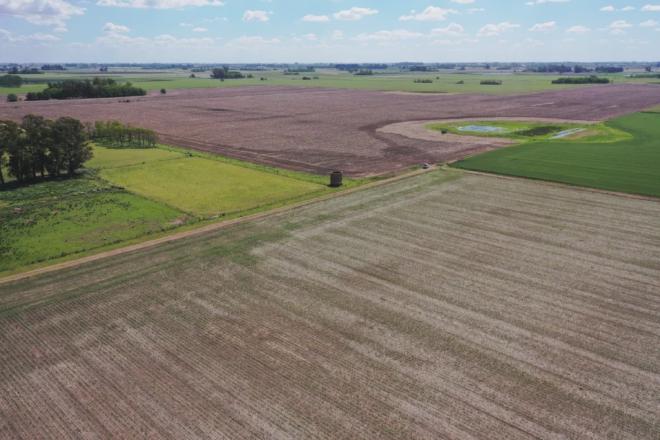
A new tool, complementary to those available #
This new product integrates and complements the map of historical vegetation anomalies already available in SEPA. While that indicator shows whether the vegetation is above or below its average behavior at a given time, this new satellite product incorporates time as a key variable. “This new product incorporates the temporal dimension, showing how long these negative anomalies were sustained,” Fischer explained. The analysis is performed over a period of up to 112 days, with updates every 16 days.
The development is part of the work of the SEPA team, of the Permanent Observatory of Agroecosystems of the Climate and Water Institute (CIRN-INTA), which promotes the development and dissemination of satellite and agrometeorological products aimed at agricultural decision-making.
Contact [Notaspampeanas](mailto: notaspampeanas@gmail.com)