


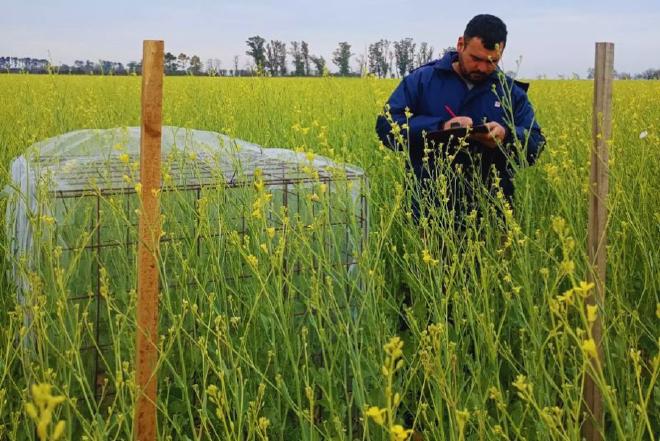
A trial carried out in Rafaela, Santa Fe, demonstrated the effect of pollinating insects and the incorporation of honey bee hives, which allows the yield of Brassica carinata to be increased by almost 900 kilos per hectare compared to situations where the flowers do not receive visitors.
“The presence of pollinators increased seed yield per unit area by 37%, without affecting fat and protein content,” explained Emanuel Orellano, INTA researcher and one of those responsible for the work.
These results position pollination as a strategic component of agronomic management: when plants were exposed to biotic pollination, the yield climbed to 2,427.9 kilograms per hectare. While, under self-pollination, the average yield was 1,538.8. “Biotic pollination significantly increased all the performance variables evaluated compared to self-pollination: more fruits formed, more seeds per fruit and higher total seed weight per unit area,” explained the researcher.
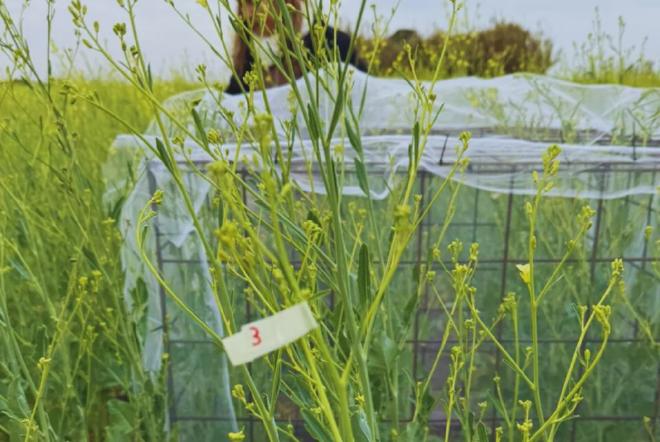
In this sense, the results confirm that, although the crop can produce seeds in the absence of pollinators, self-pollination is insufficient to express its reproductive potential, highlighting its dependence on cross-pollination.
“Biotic pollination has a positive and significant effect on the productivity of Brassica carinata under real production conditions and constitutes a key ecosystem service for agricultural production, particularly in crops with dependence on pollinating insects,” Orellano stressed.
These advances will be part of the contents that will be presented and discussed at a beekeeping conference, which will be held on February 26, at INTA Rafaela, where the results of the trial will be shown and the role of pollination as a productive input in agricultural systems in central Argentina will be addressed.
Contact [Notaspampeanas](mailto: notaspampeanas@gmail.com)