


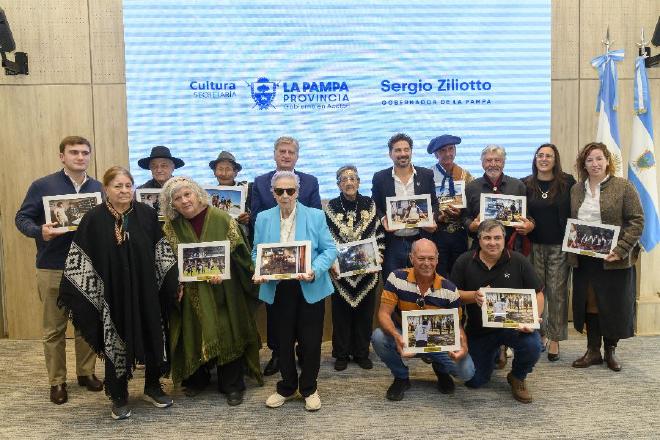
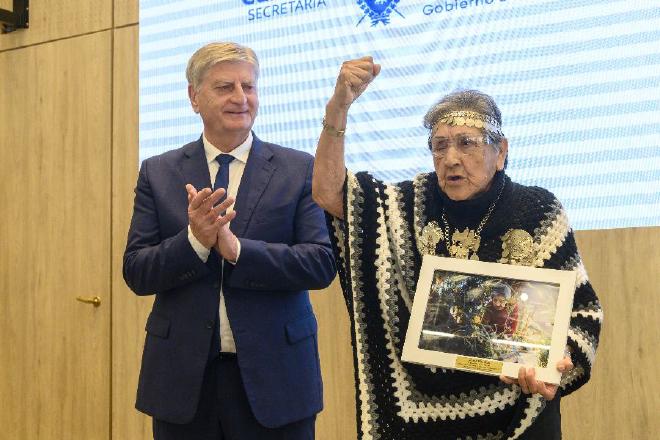
The proposal was defined as a publicly accessible tool highlights the knowledge, practices, and memories that form part of the identity of the province’s communities. The event took place in the Government House’s Hall of Agreements and was attended by provincial authorities, mayors, and cultural leaders from various towns.
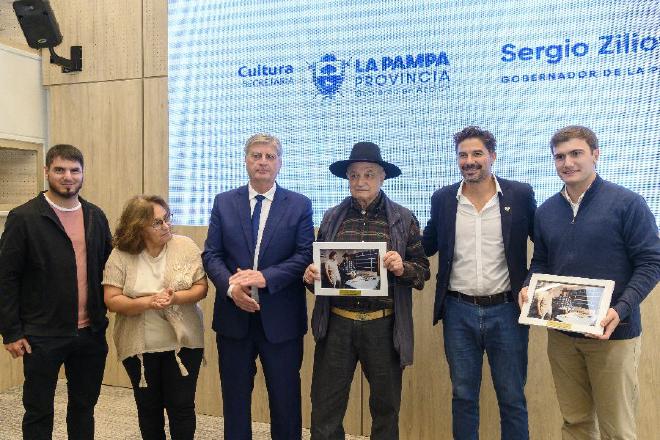
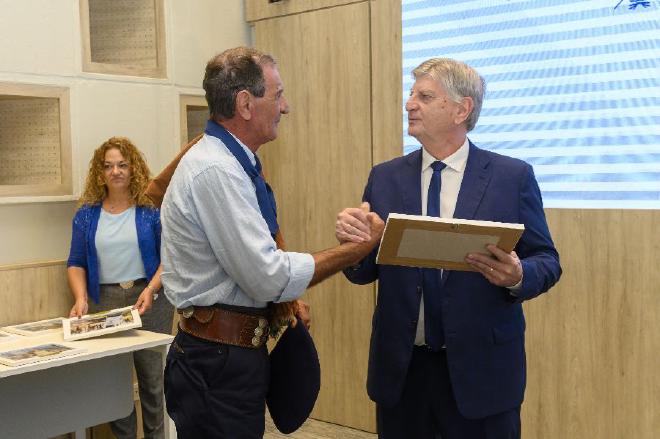
In the act where present the Secretary of Culture, Pablo Lucero; the Undersecretary of Cultural Coordination, Lis Urdaniz; local leaders; and cultural representatives from the surveyed towns.
“We will not lose our identity” #
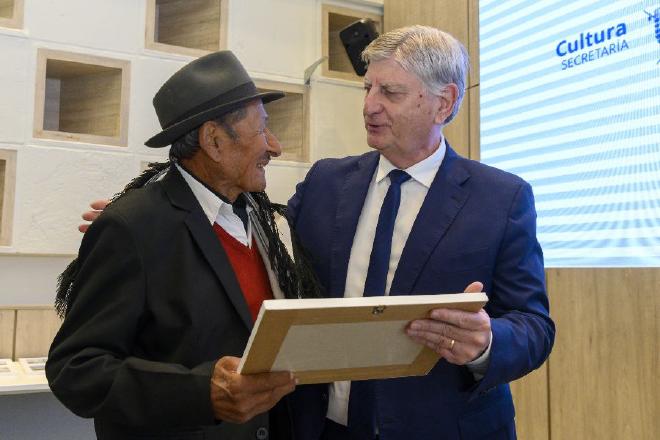
During his speech, Ziliotto emphasized the value of cultural heritage as a public policy and as part of La Pampa’s identity. “Not only looking back, anchoring ourselves in history, but also looking inward so as not to lose our identity. Peoples who lose their identity lose the reason to fight,” he stated.
The Governor reaffirmed the provincial government’s support for cultural development and the preservation of La Pampa’s identity. “Count once again, as always, on the Government of the Province of La Pampa and the Culture team to continue supporting that Pampas identity that defines us,” he concluded.
“It’s what can’t be touched, and it defines who we are” #
The Secretary of Culture, Pablo Lucero, highlighted the importance of the survey as a tool to make traditional knowledge visible and strengthen the cultural identity of La Pampa. “I see bearers of all this traditional knowledge, people who work every day to preserve what is so important to us. From the very beginning, we proposed valuing intangible cultural heritage, which is what can’t be touched, but which affects us all and is so important,” he stated.
Lucero also emphasized that the digital platform expands access to this content. “This tool not only amplifies this knowledge but also provides complete accessibility. It’s public data for research, for revision, and so that cultural workers can have access to it,” he said.
“The culture of La Pampa is diverse” #
The Undersecretary of Cultural Coordination, Lis Urdaniz, emphasized that the survey emerged from extensive and collective fieldwork. She noted that the initiative allowed them to travel throughout the province for eight months and record practices, expressions, and knowledge transmitted within communities. “This survey stemmed from a very clear conviction: the culture of La Pampa is not uniform; it is diverse and distributed throughout the province. To understand it, one must know the territory and travel across our province,” she stated.
Urdaniz indicated that the process included workshops, awareness-raising sessions, and in-person meetings with municipalities and communities, which allowed them to reach more than 50 towns and over 60% of the municipalities in La Pampa. From this fieldwork, approximately 200 expressions of intangible cultural heritage were recorded, ten of which were developed into audiovisual productions with technical specifications and specific documentation.
Contact [Notaspampeanas](mailto: notaspampeanas@gmail.com)