


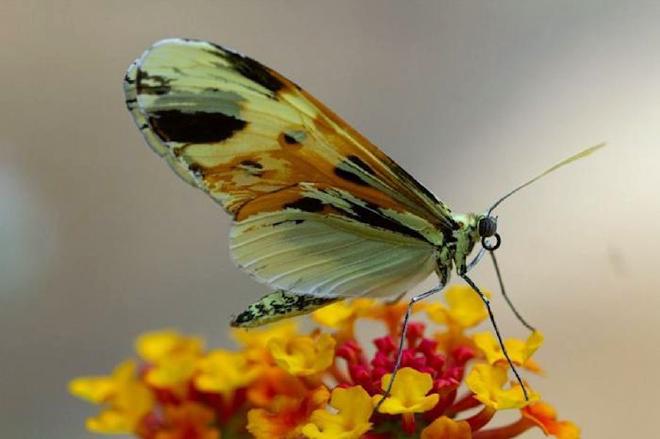
Un equipo internacional, liderado por científicos de la Universidad de York y del Instituto Wellcome Sanger, estudió varias especies de mariposas y polillas de la selva tropical sudamericana, lejanamente emparentadas, que presentan patrones de color en las alas similares para ahuyentar a los depredadores, un fenómeno conocido como mimetismo.
Los cambios genéticos en las diferentes especies de mariposas no se produjeron en los genes en sí, sino en “interruptores” similares que activan o desactivan los genes. Sorprendentemente, la especie de polilla utilizó un mecanismo de inversión —un gran fragmento de ADN invertido—, un truco genético casi idéntico al utilizado por una de las mariposas.
La investigación, publicada en la revista PLoS Biology, demuestra que la evolución no siempre es una cuestión de azar, sino que puede ser más predecible de lo que se pensaba.
La profesora Joana Meier, del Instituto Wellcome Sanger, afirmó que “estas mariposas, lejanamente emparentadas, y la polilla son tóxicas y de sabor desagradable para las aves que intentan comérselas. Se parecen mucho porque, si las aves ya han aprendido que un patrón de color específico significa ’no comer, somos tóxicos’, resulta beneficioso para otras especies mostrar los mismos colores de advertencia. Aquí demostramos que estos colores de advertencia son particularmente ideales, ya que parece bastante fácil que evolucionen estos mismos patrones de color debido a la base genética altamente conservada durante más de 120 millones de años.".
Cita #
Citation #
- El estudio Genetic parallelism underpins convergent mimicry coloration in Lepidoptera across 120 million years of evolution (El paralelismo genético sustenta la coloración por mimetismo convergente en los lepidópteros a lo largo de 120 millones de años de evolución) fue publicado en la revista PLoS Biology. Autores: Yacine Ben Chehida, Eva S. M. van der Heijden, Edward Page, Patricio A. Salazar C, Neil Rosser, Kimberly Gabriela Gavilanes Córdova,Mónica Sánchez-Prado, María José Sánchez-Carvajal, Franz Chandi, Alex P. Arias-Cruz, Maya Radford,Gerardo Lamas, Chris D. Jiggins, James Mallet, Melanie McClure, Camilo Salazar, Marianne Elias,Caroline N. Bacquet, Nicola J. Nadeau, Kanchon K. Dasmahapatra, Joana I. Meier.
Contacto [Notaspampeanas](mailto: notaspampeanas@gmail.com)