


  1. Posts/

Garlic-derived compound shows potential to improve muscle health during aging

·5 mins·
Notaspampeanas
Health Medicine Aging Populations Life Sciences Biochemistry Metabolism Muscle Tissue Bioengineering
Notaspampeanas
Author
Notaspampeanas
Digging on curiosity and science.
Table of Contents

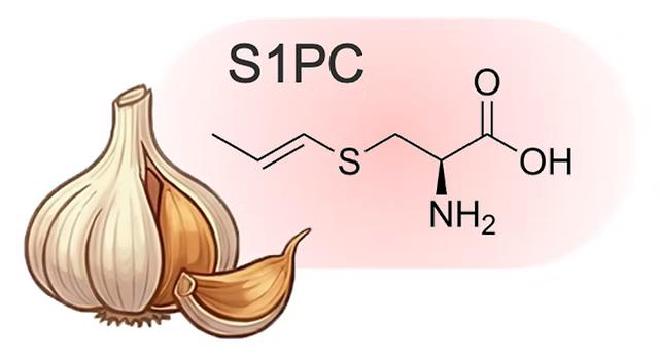
Study reveals a new anti-aging approach that improves muscle function by activating fat−brain−muscle communication triggered by a garlic-derived compound. The study reveals that S-1-propenyl-L-cysteine (S1PC), a bioactive compound found in aged garlic extract, shows potential anti-aging effects. S1PC promotes inter-organ communication between fat tissue and the brain, ultimately enhancing muscle strength, pointing to its potential in improving muscle frailty in aged individuals.

A joint research team with principal investigator Kiyoshi Yoshioka of the Research Institute on Productive Aging (IRPA)『 and the Central Research Institute of Yukinaga Pharmaceutical Co., Ltd. has found that ‘S-1-propenyl-L-cysteine’ (abbreviated as S1PC) has been shown to support health and antagonize aging through interorgan communication called fatty brain muscle (hypothalamus). Image credit: Shin-ichiro Imai et al.

A collaborative team of researchers in Japan, between the Institute for Research on Productive Aging (IRPA) in Tokyo, a non-profit aging research organization established in 2019, and Wakunaga Pharmaceutical, Co., Ltd. in Hiroshima, a worldwide leading company for products of aged garlic extract, uncovered how the S1PC *compound works in the body to influence muscle function during aging. This study was published in the journal Cell Metabolism on May 07, 2026.
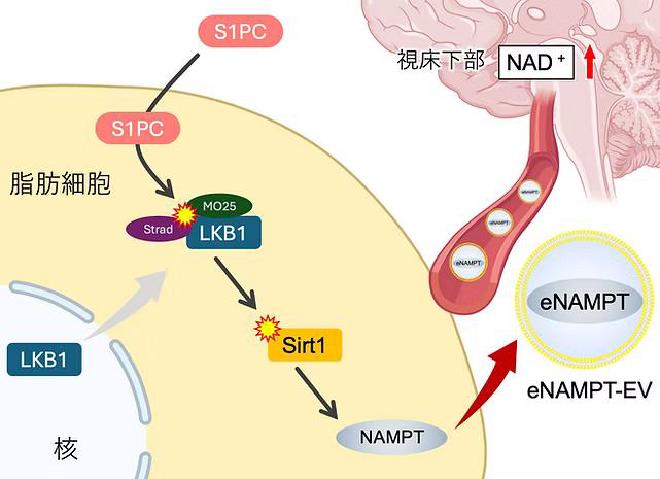
The research revealed that ingested S1PC are absorbed by adipose tissue and activate an enzyme called LKB1, which plays an important role in controlling metabolism. Image credit: Shin-ichiro Imai

“During my clinical experience as a physical therapist, I was often frustrated to see older adults lose physical function and vitality simply because they had no specific disease requiring medical treatment. This gap in proactive care has driven my research,” said Dr. Kiyoshi Yoshioka, one of the equally contributing first authors of this study. “We hope our findings will help improve fitness and muscle strength in older individuals by the simple inclusion of a nutraceutical as part of the daily diet.”
Aging research has gained a lot of traction owing to the increasingly aging population worldwide and the higher healthcare burden associated with increased muscle frailty in older individuals. Drugs that improve age-associated health conditions are costly and unsustainable in the long run. On the other hand, currently existing health diets lack scientific evidence-based backing. To fill this gap, the research team of the IRPA and Wakunaga set out to identify and develop evidence-based anti-aging interventions by investigating natural compounds found in aged garlic extract (AGE).

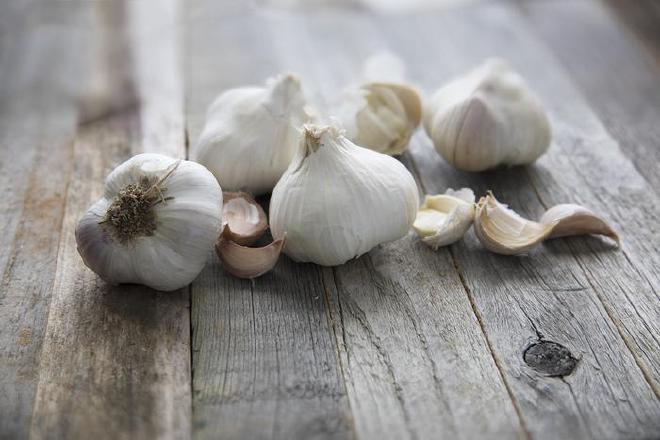
S1PC, a bioactive compound obtained from aged garlic extract, promotes the release of a key anti-aging enzyme from fat tissue that travels to the brain, activates sympathetic nervous system, improving muscle frailty in aged mice. Image credit: Kjokkenutstyr.net from Openverse Image

They investigated S1PC, a naturally occurring compound derived from AGE and discovered that it activates the enzyme liver kinase B1 (LKB1), a key regulator of cellular metabolism. Importantly, S1PC enhances the formation of a protein complex involving LKB1, which leads to activation of the SIRT1 pathway that promotes secretion of extracellular NAMPT (eNAMPT) from adipose (fat) tissue. The enzyme eNAMPT is key to the synthesis of NAD+, a small essential molecule involved in cell protection, DNA repair, and energy production.

Rather than acting directly on muscle, eNAMPT within extracellular vesicles (eNAMPT-EVs) released from fat tissue travels through the bloodstream and acts on the hypothalamus, a key regulatory center in the brain. This interaction is associated with increased sympathetic nervous signaling, which contributes to improved muscle function. The findings reveal a novel communication pathway linking fat tissue, the brain, and skeletal muscle, offering new insights into how aging-related functional decline may be regulated.

The functional benefits of S1PC were further evaluated in aged mice. Long-term administration of S1PC reduced frailty scores, increased skeletal muscle force, and restored core body temperature. Notably, a human study showed that S1PC increased eNAMPT levels in circulation, particularly in individuals with sufficient fat tissue. The finding that the distinct effect of S1PC on eNAMPT-EV secretion is conserved between cells, mice, and humans has significant implications for the use of S1PC as a potential anti-aging intervention in humans.

Highlighting the significance of their findings, Dr. Shin-ichiro Imai, the Chairman of the IRPA, said: “Our findings present a previously unrecognized and unique function of S1PC in activating LKB1, and in promoting an inter-organ communication that ameliorates muscle frailty. We anticipate that S1PC is likely to have a broader anti-aging effect that warrants detailed investigation.”

S1PC represents a potential nutraceutical approach to address age-related muscle decline and may complement other approaches, such as NAD⁺-boosting compounds. As a component of traditional medicine, AGE has been consumed for generations with no reports of adverse events, suggesting a favorable safety profile for S1PC. Sharing his future vision, **Dr. Imai **explained: “We have succeeded in expanding the current understanding of how different organs coordinate responses during aging. Further research is needed to determine improvements in muscle function in humans and to evaluate the long-term effects of S1PC. The presence and possible role of LKB1 in the brain also needs evaluation.”

By revealing how S1PC influences muscle function, this research opens new directions for understanding and potentially addressing the global challenge of age-related decline.

This research will also be presented at FASEB SRC on NAD+ Metabolism & Signaling, to be held on June 7-11 in Melbourne, Florida, USA.

Citation
#

  • The study Garlic-derived metabolite activates LKB1, promotes adipose eNAMPT secretion and improves age-related muscle function via hypothalamic signalling was published on Cell Metabolism. Authors: Jun-ichiro Suzuki, Kiyoshi Yoshioka, Masahiro Kurita, Takumi Sugimoto, Takahiro Eguchi, Naoki Ito, Aoi Kodama, Yasutomi Kamei, Masahiro Ohtani, Toshiaki Matsutomo,Shin-ichiro Imai
This is an error!


Contact [Notaspampeanas](mailto: notaspampeanas@gmail.com)


Related

La Pampa: The Ministry of Production participated in the national debate on the Seed Law
·3 mins
Notaspampeanas
Why some volcanoes don’t explode
·5 mins
Notaspampeanas
Volcanoes ETH Zurich
Theia and Earth Were Neighbors
·6 mins
Notaspampeanas
Planetary Science Geochemistry
La Pampa: Comprehensive activities to raise awareness about Diabetes
·4 mins
Notaspampeanas
La Pampa World Diabetes Day
Reeds can promote the proliferation of mosquitoes in rivers, canals and ponds
·5 mins
Notaspampeanas
Ecology Arundo Donax Mosquitoes Reeds
When oxygen determines if a limb can regrow
·5 mins
Notaspampeanas
Tissue Regeneration Vertebrate Limb Regenerate Oxygen-Sensing Amphibians