


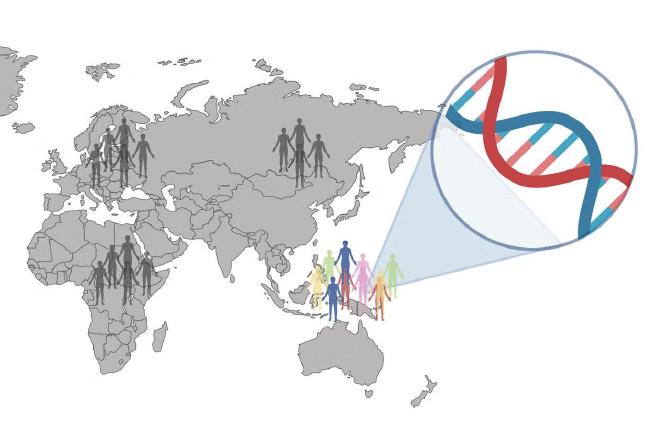
A pesar de albergar una diversidad notable, las poblaciones de esa vasta región del Pacífico Sur han sido históricamente pasadas por alto en los estudios genéticos humanos globales, que a menudo se han centrado principalmente en personas de ascendencia europea, según afirman los investigadores.
«La drástica subrepresentación de los habitantes de Oceanía limita nuestra comprensión de la evolución humana y podría exacerbar las desigualdades en materia de salud a medida que se utiliza la investigación genómica para desarrollar nuevos tratamientos médicos», afirmó la autora principal, Serena Tucci, profesora adjunta de antropología en la Facultad de Artes y Ciencias de Yale e investigadora principal del Laboratorio de Genómica Evolutiva Humana de Yale. «Para subsanar esta deficiencia, mi equipo de investigación emprendió un proyecto a gran escala para ampliar el conocimiento sobre la variación genética humana, incluidas las variantes genéticas heredadas de homininos extintos».
El estudio, publicado ayer en la revista Science, muestra cómo los genes que los humanos antiguos adquirieron tras aparearse con homininos extintos siguen dando forma a la biología, la salud y la supervivencia de nuestra especie en la actualidad.
Al rastrear la historia de los primeros pobladores del Pacífico, quienes migraron a la región hace al menos 45.000 años, los investigadores descubrieron datos sin precedentes sobre la historia evolutiva y la adaptación humanas. Por ejemplo, hallaron que los ancestros de las poblaciones del Océano Índico se aparearon con al menos tres grupos distintos emparentados con los denisovanos, un enigmático grupo de homininos descubierto inicialmente a partir de fragmentos fósiles en Siberia.
“Estudios previos demostraron que el ADN heredado de homininos extintos, como los neandertales y los denisovanos, sobrevive, disperso, en los genomas de las poblaciones humanas actuales”, afirmó Tucci. “Con este estudio, hemos ido más allá de simplemente ‘resucitar’ este ADN, demostrando cómo activa y desactiva genes activamente, lo cual supone un avance revolucionario. Este ADN no es solo un vestigio de antiguas relaciones; continúa influyendo en nuestra biología hoy en día”.
Para este nuevo estudio, los investigadores utilizaron una técnica genómica funcional avanzada, conocida como “ensayo de reportero masivamente paralelo”, para evaluar físicamente las consecuencias funcionales de estas variantes genéticas e identificaron más de 3100 que alteran la expresión génica. Según los investigadores, este análisis proporcionó algunas de las evidencias a mayor escala sobre cómo funcionan en los humanos actuales las variantes genéticas adaptativas específicas heredadas de los denisovanos.
«El ADN de homininos extintos —denisovanos y neandertales— facilitó la adaptación humana a los diversos entornos que encontraron las personas al migrar a esta región del mundo», afirmó Patrick Reilly, primer autor del estudio e investigador asociado del Laboratorio de Genómica Evolutiva Humana de Yale, perteneciente al Departamento de Antropología. «Los patógenos constituyen una de las presiones selectivas más importantes —factores ambientales que afectan nuestra capacidad de supervivencia— a lo largo de la evolución humana. Hemos encontrado evidencia de que los genes heredados de los denisovanos reforzaron la inmunidad a los virus y bacterias que los humanos antiguos encontraron en Oceanía Cercana».
“Si bien los denisovanos desaparecieron de la Tierra hace miles de años, esta investigación demuestra que nuestras historias siguen profundamente entrelazadas”, dijo Tucci.
Cita #
- El estudio Long-term isolation and archaic introgression shape functional genetic variation in Near Oceania (El aislamiento a largo plazo y la introgresión arcaica dan forma a la variación genética funcional en Oceanía Cercana), fue publicado en la revista Science. Autores: Patrick F. Reilly, Stephen Rong, Daniela Tejada-Martinez, Samantha L. Miller, Audrey Tjahjadi, Chang Liu, Jared Akers, Alysa Pomer, Margaret E. Prentice, D. Andrew Merriwether, Françoise R. Friedlaender, George Koki, Jonathan S. Friedlaender, Steven K. Reilly, and Serena Tucci
Financiación #
La investigación contó con el apoyo del Instituto Nacional de Ciencias Médicas Generales y del Instituto Nacional de Investigación del Genoma Humano de los Institutos Nacionales de Salud de Estados Unidos.
Contacto [Notaspampeanas](mailto: notaspampeanas@gmail.com)