En el CONICET trabajan en el desarrollo de aislantes termoacústicos a partir de residuos vitivinícolas
·5 mins·
Notaspampeanas
CONICET
Aislantes Termoacústicos
Biomateriales
Economía Circular
Industria De La Construcción
Autor
Notaspampeanas
Notaspampeanas
Tabla de contenido
Tabla de contenido
El proyecto apunta a producir biomateriales a partir del cultivo de micelio de hongos sobre biomasa de desechos de podas de vid. Dentro de la industria de la construcción, estos materiales podrían integrarse en todo tipo de edificaciones y en rehabilitación de espacios, sustituyendo aislantes convencionales altamente contaminantes.
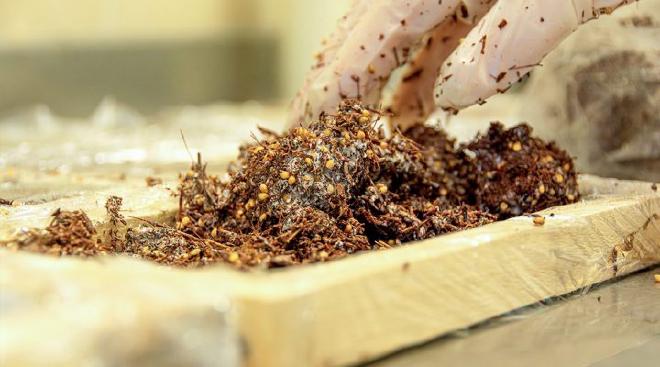
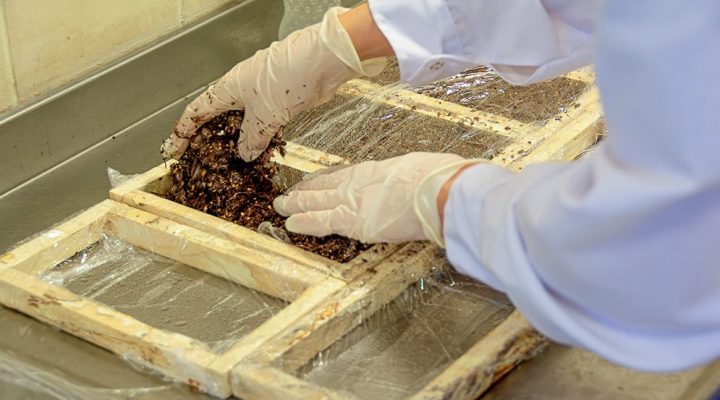
Armado de probetas de ensayo en el laboratorio. Fotos; CONICET Mendoza.
Especialistas del CONICET trabajan en un proyecto para desarrollar sistemas aislantes térmicos y acústicos, a partir de residuos vitivinícolas ligados orgánicamente con micelio de hongos. Se trata de un proceso conocido como biofabricación que tiene como objetivos aportar soluciones que respondan a políticas públicas de sostenibilidad urbana, disminuir las emisiones de gases de efecto invernadero y favorecer la transición energética. El proyecto cuenta además con la colaboración de una bodega mendocina que provee los desechos de la industria del vino.
Aunque cumplen un rol clave en la eficiencia térmica de los edificios, muchos de los materiales aislantes empleados por la industria de la construcción presentan un costo ambiental significativo desde su origen. Productos como el poliestireno expandido (EPS), el poliuretano, la lana de vidrio o la lana de roca se elaboran a partir de recursos no renovables y mediante procesos industriales que demandan grandes cantidades de energía.
“La construcción de los materiales aislantes tradicionales supone una importante fuente de contaminación a la atmósfera. En contraste, la tendencia actual se orienta al desarrollo de propuestas de aislamiento térmico y acústico con enfoque sustentable. Nuestra investigación se alinea con estas tendencias internacionales que priorizan materiales con baja energía incorporada y una reducida huella de carbono, optimizando la eficiencia energética no solo en la etapa de uso, sino desde la producción”, comentó Ayelén Villalba, investigadora del CONICET en el Instituto de Ambiente, Hábitat y Energía (INAHE, CONICET), y una de las responsables del proyecto.
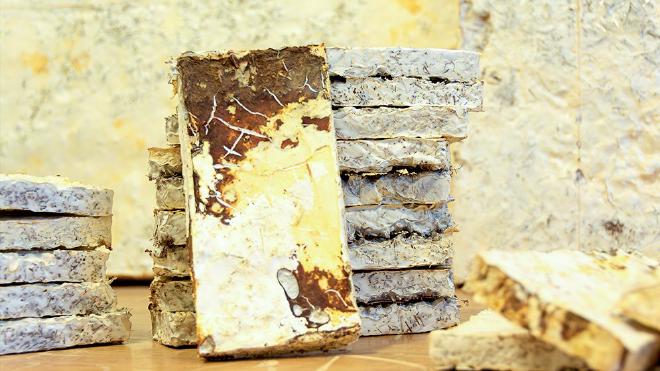
Diferentes probetas de ensayo para caracterización de propiedades térmicas y acústicas. Fotografía: CONICET Mendoza
El desarrollo se enfoca en producir biomateriales a partir del cultivo de micelio sobre biomasa de desechos de la industria vitivinícola compuesta por podas de vid. Además de la producción del material, el proyecto contempla el análisis de sus propiedades físicas, químicas y mecánicas, y el diseño de prototipos que faciliten su aplicación en sistemas constructivos.
El micelio crea una red de filamentos microscópicos en la biomasa que se ramifican y fusionan entre sí y con el sustrato, integrándose químicamente con él. Fotografía: CONICET Mendoza
“Los biomateriales elaborados a partir de residuos agroindustriales bioligados con micelio de hongos representan una alternativa innovadora y sostenible que permite valorizar recursos locales, disminuir el uso de energía y promover estrategias de economía circular en la construcción”, destacó Noelia Alchapar, otra de las investigadoras del CONICET en el INAHE involucradas en el trabajo.
Esta combinación de elementos para aplicaciones en la industria de la construcción es uno de los aspectos más novedosos del proyecto.Actualmente, no existe un desarrollo similar con biomasa de poda de vid para la producción de materiales de construcción.
“Las particularidades del uso de residuos vitivinícolas como sustrato, por su característica heterogénea y su composición alta en lignina, hacen que tengamos un material con una mayor integridad estructural que otros compuestos de micelio”, explicó Maira Terraza, becaria doctoral del CONICET en el INAHE. “El micelio crea una red de hifas (filamentos microscópicos) en la biomasa que se ramifican y fusionan entre sí y con el sustrato, integrándose químicamente con él. Esta red consolida las partículas del sustrato generando un solo bloque de material”, añadió.
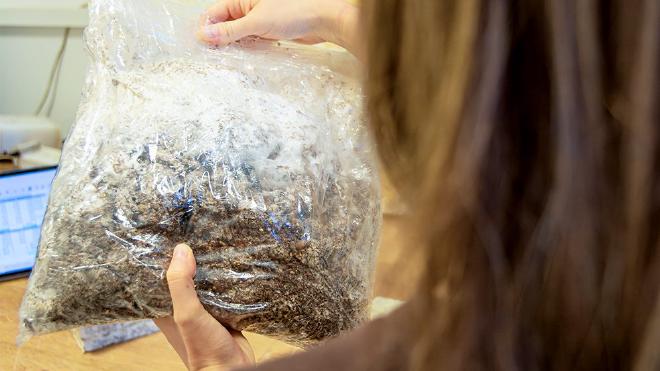
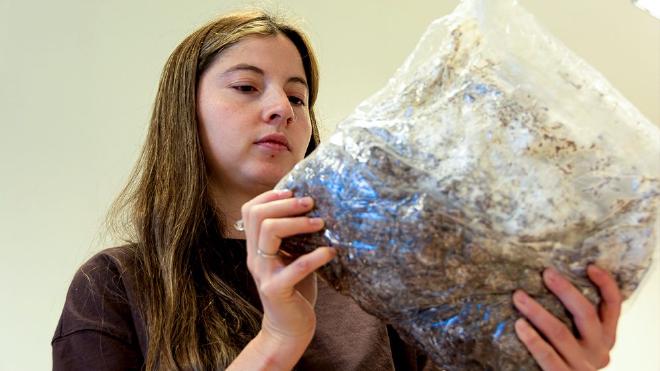
Maira Terraza, una de las responsables del proyecto, realiza una inspección visual de la colonización del sustrato. Fotografía CONICET Mendoza
El equipo ya desarrolló prototipos que fueron testeados en laboratorio y que demostraron que el material presenta un buen comportamiento como aislante térmico y contribuye eficazmente a la absorción acústica. Respecto a su durabilidad, a pesar de tratarse de un material de procedencia orgánica y biodegradable, presenta buena tolerancia al deterioro en situaciones de uso. “Estamos avanzando en la optimización de los protocolos de producción para obtener un material que perdure en el tiempo y alcance los estándares requeridos en la industria de la construcción”, señaló Terraza.
Potencial impacto en la industria de la construcción
#
En la industria de la construcción, estos materiales podrían integrarse en todo tipo de edificaciones y en rehabilitación de espacios, sustituyendo aislantes convencionales. Es decir, que su implementación resulta factible tanto en desarrollos constructivos nuevos como en intervenciones orientadas a mejorar el desempeño energético de construcciones ya existentes. Además de sus ventajas ambientales, este biomaterial ofrece una oportunidad concreta para optimizar el desempeño energético de las edificaciones y disminuir sus requerimientos de energía.
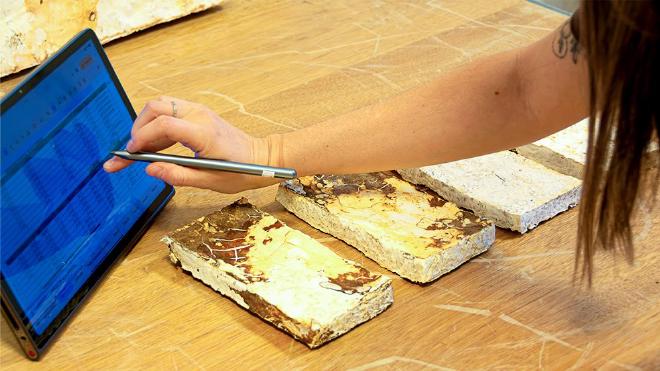
Registro de datos para evaluar la estabilidad dimensional. Fotografía: CONICET Mendoza
“El gran potencial de los biomateriales es que nos permiten reimaginar los residuos como recursos estratégicos y utilizar los procesos y recursos naturales a nuestro favor. Pero, además, este enfoque fortalece directamente la economía regional, al darle un nuevo valor a la biomasa de la industria vitivinícola, transformamos un residuo local en un insumo tecnológico de alto nivel. Así, no solo reducimos el impacto ambiental, sino que generamos nuevas cadenas de valor que impulsan el desarrollo productivo de nuestra región. El rol de la investigación científica aquí es fundamental, ya que es lo que nos permite pasar de las ideas y la experimentación a soluciones reales, escalables y responsables”, concluyó Terraza.
Además de las científicas del INAHE, Pablo Postemsky, investigador del CONICET en el Centro de Recursos Naturales Renovables de la Zona Semiárida (CONICET-UNS) participa en el proyecto.
El artículo Especialistas del CONICET trabajan en el desarrollo de aislantes termoacústicos a partir de residuos vitivinícolas, con la firma de Leonardo Fernández – Área de Comunicación CONICET Mendoza fue publicado en el sitio web del CONICET.