


  1. Posts/

Rice necrotic mosaic virus identified in Argentina

·4 mins·
Notaspampeanas
Argentina INTA Institute of Plant Pathology Rice Necrotic Mosaic Virus CONICET National University of the Northeast Corrientes Oryza Sativa Metagenomics MVRN RT-PCR Illumina High-Throughput Platform Polymyxa Graminis SiRNAs
Notaspampeanas
Author
Notaspampeanas
Digging on curiosity and science.
Table of Contents

A research team made up of specialists from national and international organizations managed to identify the rice necrotic mosaic virus (RNMV) in Argentina, a disease that until now had only been reported in Japan. The study also made possible to reconstruct the genome of the virus present in the country.

A research team – made up of specialists from INTA’s Institute of Plant Pathology, the CONICET, the National University of the Northeast and research centers in France – identified and characterized for the first time in Argentina the rice necrotic mosaic virus (RNMV), reported only in Asia. The finding was confirmed by metagenomics and high-precision sequencing techniques, from samples collected in Corrientes province. This is the first record of the virus outside Japan and expands the health scenario of the crop. In addition, it raises the need to continue monitoring and diagnosis in rice systems.

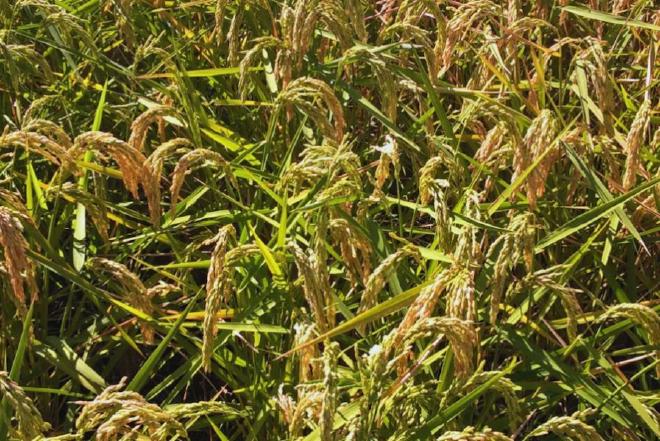
The work was based on the analysis of rice plants (Oryza sativa) with symptoms compatible with viral infections, collected in 2018 in Berón de Astrada, province of Corrientes. Using a viral metagenomics approach, the researchers detected the presence of MVRN in only one of the samples analyzed.

In the field, many rice viral diseases can exhibit similar symptoms, such as yellowing, mosaics, or weakening of plants. However, not all viruses behave in the same way or are transmitted in the same way. To validate the results, complementary molecular techniques such as RT-PCR and RNA sequencing were applied using the Illumina high-throughput platform. These tools not only confirmed the infection of the analyzed sample, but also made it possible to reconstruct the genome of a local virus isolate.

Comparative analyses showed a high genetic similarity between this isolation and MVRN variants previously characterized in Japan. In turn, phylogenetic studies confirmed that it is the same virus, which constitutes the first record outside the Asian continent.
“The possibility of obtaining the genomic sequence of the isolate allowed us to accurately confirm the identity of the virus, which is essential to correctly interpret the symptoms observed in the crop and avoid confusion with other diseases,” said Florencia Brugo, a researcher at INTA’s Institute of Plant Pathology (IPAVE) and a participant in the work.

MVRN belongs to a group of viruses that are transmitted by the soil fungus, Polymyxa graminis, which can persist for long periods in rice fields. This characteristic makes the disease difficult to manage and reinforces the importance of early detection.

Until this finding, only three viruses affecting rice cultivation had been reported in South America: rice white leaf virus or rice stripe necrosis virus. The detection of MVRN for the first time in Argentina raises the need to expand research to verify its presence and establishment in the country.

“The incorporation of this virus into the regional scenario makes it necessary to strengthen monitoring and diagnostic strategies, especially in rice-growing areas,” Brugo said. Although the finding corresponds to a single positive sample and is not representative of the health of rice cultivation in Argentina, the work highlights the importance of systematic monitoring and having adequate diagnostic tools.

Another highlight point of the study was the identification of small virus-derived RNAs (siRNAs), which show the activation of the plant’s defense mechanisms against infection. This type of analysis provides key information to understand the interaction between the pathogen and its host. “The study of these small RNAs allows us to see how the plant responds to the viral attack, which can be useful for the development of management or improvement strategies,” said the INTA researcher.

Surveillance and tools for the future
#

As this is a first record, it is essential to continue with the surveillance of the RNMV, in order to know the situation of the virus in the country and, eventually, develop future management strategies, selection of materials and epidemiological studies.

“Surveillance based on genomic technologies is key to anticipating the emergence of new diseases and reducing risks in agricultural production,” Brugo concluded.


Contact [Notaspampeanas](mailto: notaspampeanas@gmail.com)


Related

La Pampa: The Ministry of Production participated in the national debate on the Seed Law
·3 mins
Notaspampeanas
Why some volcanoes don’t explode
·5 mins
Notaspampeanas
Volcanoes ETH Zurich
Theia and Earth Were Neighbors
·6 mins
Notaspampeanas
Planetary Science Geochemistry
La Pampa: Comprehensive activities to raise awareness about Diabetes
·4 mins
Notaspampeanas
La Pampa World Diabetes Day
Reeds can promote the proliferation of mosquitoes in rivers, canals and ponds
·5 mins
Notaspampeanas
Ecology Arundo Donax Mosquitoes Reeds
Argentina: Tick-borne bacteria detected in wildlife
·4 mins
Notaspampeanas
Argentina INTA Zoonosis Ehrlichia Chaffeensis Ciervo De Los Pantanos Fauna Silvestre