Los incendios forestales de bosques andino-patagónicos además de producir transformaciones en la vegetación y la fauna también alcanzan a ríos y arroyos, donde puede alterarse la calidad del agua y el funcionamiento de los ecosistemas acuáticos. Comprender cómo responden estos cuerpos de agua después del fuego resulta clave para evaluar los impactos de estos eventos y diseñar estrategias de manejo que contribuyan a la conservación de la biodiversidad y de los servicios ecosistémicos asociados a los recursos hídricos, señaló un artículo publicado por el CONICET, con origen en Comunicación CIEMEP (CONICET-UNPSJB).
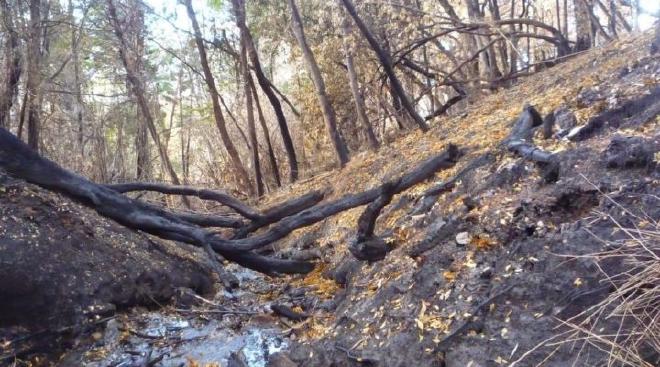
Zona del incendio Cholila-Golondrinas. Crédito de la imagen: Assef et al..
Un equipo de investigación del CONICET, perteneciente al Centro de Investigación Esquel de Montaña y Estepa Patagónica (CIEMEP, CONICET-UNPSJB), en colaboración con investigadoras del laboratorio de Química de la empresa INVAP, analizó cómo un gran incendio forestal ocurrido en 2021 en la Patagonia argentina afectó la calidad del agua y la dinámica de nutrientes de arroyos de cuencas quemadas durante 28 meses posteriores al evento. Este aporte científico, realizado porCecilia Brand, Yanina Assef y colaboradores, fue publicado recientemente en la revista especializada Science of The Total Environment. El trabajo destaca la importancia de comprender los efectos del fuego sobre ríos y arroyos de cabecera: “Estos ecosistemas no sólo constituyen una fuente esencial de abastecimiento de agua para numerosas comunidades, sino que también sostienen múltiples actividades económicas y productivas de la región andino-patagónica”, comentó Assef.
Aquel incendio forestal de gran magnitud se originó cerca de las localidades de Las Golondrinas y El Hoyo en la provincia de Chubut y afectó más de 13 mil hectáreas de Bosque Patagónico. Según las especialistas, a pesar de que este evento provocó importantes pérdidas ambientales, incluyendo extensas áreas boscosas y fauna silvestre, también representó una oportunidad única para el desarrollo del trabajo publicado en la actualidad.
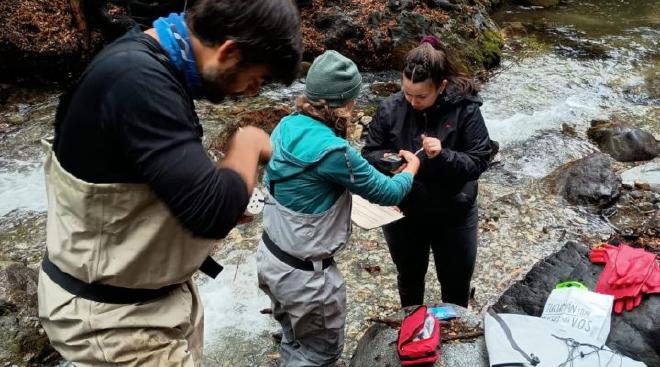
Toma de muestra en sitios del incendio. Crédito de la imagen: Assef et all..
Para evaluar los efectos del fuego, el equipo comparó cuatro arroyos afectados por el incendio con otros cuatro arroyos de referencia que no fueron alcanzados por las llamas y presentaron características ambientales similares.
“El estudio nos permitió identificar y comprender la denominada ventana de perturbación -periodo temporal crítico inmediatamente posterior al fuego caracterizado por una alta vulnerabilidad ambiental-, que generalmente se inicia con las primeras lluvias posteriores al incendio. En esta etapa observamos incrementos muy marcados en la conductividad eléctrica y en la cantidad de sólidos suspendidos que se evidenciaron como un aumento de la turbidez del agua en los arroyos quemados”, expresó Assef. La investigadora añadió que, durante el período inicial, las concentraciones de fósforo llegaron a ser hasta 17 veces más altas que las de los sitios de referencia. “Posteriormente, a medida que los niveles de fósforo comenzaron a disminuir observamos un aumento sostenido y muy importante de los compuestos nitrogenados, especialmente de los nitratos, una tendencia que se mantuvo hasta el final del estudio”, añadió.
En la misma línea, Brand detalló que el aumento sostenido de nitratos en el agua se debe a que los procesos de transformación de nitrógeno continúan activos, pero que la capacidad de la vegetación quemada de absorber los nutrientes se ve drásticamente reducida. Este efecto es proporcional a la superficie de la cuenca afectada por el incendio.
“En el primer muestreo también detectamos un aumento de algunos metales pesados. Lo llamativo fue que este incremento apareció en todos los arroyos, no solo en los que habían sido afectados por el incendio. Probablemente las partículas generadas por la combustión fueron transportadas por el viento y se depositaron de manera relativamente uniforme en toda la zona”, precisó Assef.
En este contexto, “la proximidad geográfica del CIEMEP al área afectada, sumado a la disponibilidad de vehículos, laboratorios y equipamiento especializado, fue clave para realizar monitoreos periódicos y obtener información valiosa sobre cómo responden los ecosistemas acuáticos después de un incendio”, remarcó Brand. Además, precisó que, aunque los incendios forestales representan uno de los principales disturbios que afectan a la región y provocan severas consecuencias sociales, económicas y ambientales, el impacto de estos eventos sobre la calidad del agua sigue siendo un aspecto poco estudiado, tanto en la Patagonia como en Argentina en general.
“Iniciamos el trabajo de campo en junio de 2021, apenas dos meses después de que el incendio fuera extinguido, y desde entonces hemos mantenido un monitoreo continuo que se extiende hasta el día de hoy, aunque el artículo publicado muestra resultados de los primeros tres años”, explicó Assef.
Efectos de los incendios en los ecosistemas acuáticos
#
Las especialistas expresaron que al igual que lo reportado en otras partes del mundo, se observa que los efectos de los incendios forestales en los ecosistemas acuáticos de la región patagónica varían según la extensión y la severidad del fuego, las dimensiones del arroyo, la topografía y el tipo de cobertura vegetal. Más aún, los incendios más recientes, como los que ocurrieron en el Parque Nacional Los Alerces (Chubut), en los años 2024 y 2026, dan la oportunidad de continuar sus estudios para responder otras preguntas que se generaron a partir de las primeras investigaciones.
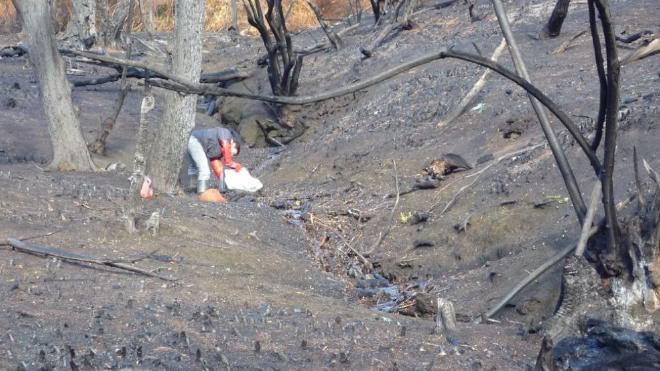
Estado de un arroyo postincendio en la región andino-patagónica en Chubut. Crédito de la imagen: Assef et all..
Assef y Brand resaltaron que los resultados obtenidos alertan sobre las posibles modificaciones en los ecosistemas a mayor escala: “El incremento elevado de nutrientes sostenido en el tiempo puede tener consecuencias sobre la salud del ecosistema, modificando tramas tróficas y en última instancia pudiendo afectar la calidad del agua para consumo”. Y advirtieron que estos cambios pueden agravarse si se combinan con otras actividades que aportan nutrientes al cuerpo de agua o que dificulten la regeneración de la vegetación ribereña.
“Debemos que tener en cuenta que a medida que crecen las poblaciones y se expanden las zonas habitadas hacia áreas naturales, los incendios forestales afectan cada vez con mayor frecuencia cuencas utilizadas como fuentes de agua para consumo humano”, señaló Brand. “Esto hace que el monitoreo regular de la calidad del agua sea una herramienta esencial para identificar posibles impactos del fuego y garantizar la seguridad sanitaria de las comunidades”, concluyó.
Cecilia Brand, Mauricio Dromaz, María Luciana Carignano, Cintia Ravasi, Yanina Assef, Impact of forest fires on water quality and nutrient dynamics in burned streams in Patagonia, Science of The Total Environment, Volume 1006, 2025, 180887, ISSN 0048-9697, https://doi.org/10.1016/j.scitotenv.2025.180887.
El artículo Determinan el impacto de los incendios forestales en los cuerpos de agua fue publicado en el sitio web del CONICET, con la firma de Comunicación CIEMEP (CONICET-UNPSJB)