


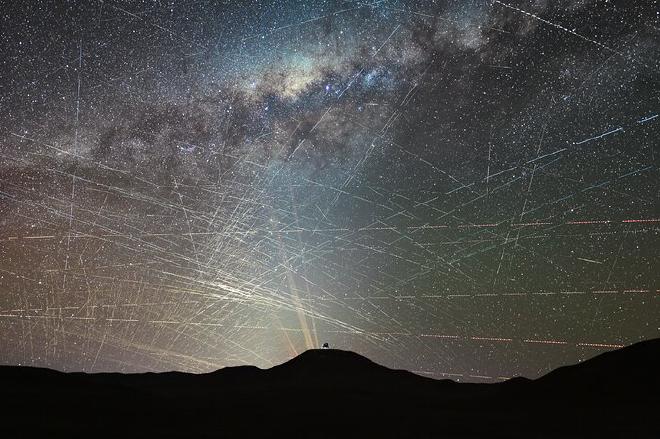
Desde 2019, el número de satélites en la órbita terrestre ha aumentado rápidamente, hasta superar actualmente los 14.000 1 (entre los que predominan los satélites de telecomunicaciones Starlink, de SpaceX). Las propuestas de satélites también han aumentado, tanto en número como en posible impacto. “Hasta ahora lo hemos conseguido, pero está empeorando”, subrayó Olivier Hainaut, quien ha participado en el desarrollo de recomendaciones para mitigar el impacto de las constelaciones de satélites en la astronomía. Aunque empresas como SpaceX han tomado medidas para hacer que sus satélites sean menos brillantes, las propuestas actuales de satélites están yendo “más allá del límite” de lo que la astronomía puede soportar, afirma. Hainaut, astrónomo en ESO desde hace más de 30 años, es autor del estudio revisado por pares sobre los impactos de las constelaciones de satélites, publicado hoy y aceptado para su publicación en Astronomy & Astrophysics.
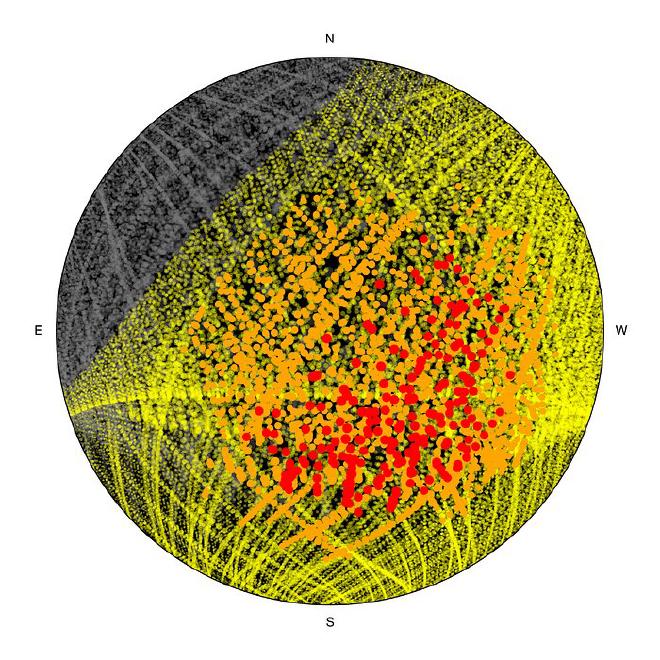
La empresa Reflect Orbital, una start-up estadounidense, pretende lanzar una constelación de satélites muy grandes en forma de espejo para proporcionar luz solar por la noche, con haces reflejados que se extienden al menos cinco kilómetros sobre la superficie terrestre. Tienen la intención de comenzar este año con un satélite prototipo en órbita, aumentando su población de satélites a 50.000 para 2035. Estos satélites serían los más brillantes jamás puestos en órbita, con consecuencias dañinas para los cielos oscuros en la Tierra. Los cálculos de Hainaut muestran que toda la constelación llenaría el cielo nocturno con cientos de satélites muy visibles. Visto desde dentro de un haz reflejado, el satélite que emite la luz solar parecería cuatro veces más brillante que la Luna llena. Incluso si ningún satélite apuntara su haz directamente a un observador, cada uno sería tan brillante como el planeta Venus, la ’estrella del alba’. Desde una ciudad contaminada por la luz, como Múnich (Alemania), estos cientos de satélites serían las únicas ’estrellas’ visibles en el cielo nocturno.
Estelas brillantes y cielos más claros #
Hainaut explicó que “los satélites, iluminados por el Sol, son mucho más brillantes que galaxias lejanas. Cuando un satélite cruza lo que observamos, deja una estela brillante en nuestra imagen, arruinando la observación de lo que sea que esté detrás”.
Para calcular el impacto de este y otros efectos de las constelaciones de satélites en las observaciones astronómicas, Hainaut simuló las posiciones, el movimiento y el brillo de todas las constelaciones de satélites presentes y planificadas para el futuro.
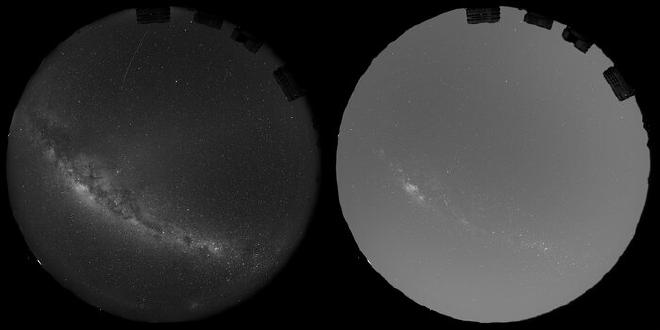
Las simulaciones de Hainaut asumieron que ningún satélite de la empresa Reflect Orbital apuntaría su haz directamente hacia o cerca de un observatorio. Aun así, el rastro de un solo satélite espejo podría estropear una observación con una cámara como la del Observatorio Rubin. Con toda la flota de satélites Reflect Orbital en órbita, todas las imágenes de una cámara así se perderían cuando los satélites fueran iluminados por el Sol.
Actualmente hay más de 14 000 satélites en órbita, pero las nuevas propuestas de SpaceX, Reflect Orbital y otras compañías podrían aumentar esa cifra a más de 1,7 millones. En este vídeo, dos expertos del ESO nos hablan de las devastadoras consecuencias que esto tendría para la astronomía y de las opciones técnicas y legales para limitar este daño. Crédito: ESO. Dirigida por: L. Calçada, M. Kornmesser, B. Ferreira. Presentada por: S. Randall. Escrito por: E. Elkington, S. Randall. Edición: M. Kornmesser, L. Calçada. Videografía: A. Tsaousis. Animaciones y metraje: ESO, L. Calçada, M. Kornmesser, Future/Brett Tingley, ESA, S. Guisard, Torsten Hansen/IAU OAES, S. Brunier, F. Kamphues, B. Häuẞler, SpaceX, Reflect Orbital, @EmericTimelapse, RubinObs/NSF/AURA/H. Stockebrand, C. Malin, B. Tafreshi, G. Lombardi, INAF-VST/OmegaCAM, P. Horálek, satellitemap.space, J. McDowell. Música: Envato. Soporte web y técnico: R. Yumi Shida. Verificación de datos: O. Hainaut, B. Kioko. Promoción: JC Muñoz Mateos, O. Sandu. Lugares de filmación: ESO Supernova ( supernova.eso.org). Producido por ESO, el Observatorio Europeo Austral (eso.org).
Este time-lapse muestra satélites cruzando el cielo nocturno sobre el norte del desierto de Atacama, en Chile, durante una hora. Fue grabado el 15 de octubre de 2025, aproximadamente dos horas después de la puesta del sol. Algunas estelas son causadas por aviones, fácilmente identificables por sus luces de colores intermitentes, pero la mayoría corresponden a satélites. En primer plano vemos la cúpula del Telescopio Extremadamente Grande (ELT) del ESO, el telescopio óptico/infrarrojo más grande del mundo, actualmente en construcción en la cima del Cerro Armazones. Detrás, observamos los láseres del Telescopio Muy Grande (VLT) del ESO en el Observatorio Paranal, a 22 km del ELT. Crédito: F. Kamphues, ESO/M. Kornmesser
Las constelaciones satelitales muy brillantes, como la de Reflect Orbital, tendrían un efecto particularmente significativo en el brillo del cielo de fondo. Con los 50.000 satélites Reflect Orbital en órbita, el cielo sería hasta tres o cuatro veces más brillante.
Limitar los satélites para proteger el cielo nocturno #
Hainaut concluyó que los 1,7 millones de nuevos satélites propuestos tendrían consecuencias drásticas para la astronomía terrestre. Estos impactos solo pueden evitarse limitando el total, tanto de los satélites existentes como futuros, a 100.000 satélites lo suficientemente tenues como para no verse a simple vista desde un lugar oscuro. “No es un número fijo, no podemos decir que 99.999 sea bueno y 100.001 sea malo: claramente preferiría 50.000”, expresó Hainaut. “Pero 100.000 causa pérdidas a un nivel similar a otras pérdidas técnicas, como fallos de equipamiento.” Sin embargo, añadió, los satélites deben ser más tenues que la magnitud visual 7 2; si algunos de ellos son demasiado brillantes — por encima del umbral mínimo para la visibilidad a simple vista — el número total tendría que ser mucho menor.
Este time-lapse muestra satélites sobre el Observatorio Paranal de ESO en Chile. Fue grabado el 24 de octubre de 2025 y abarca cuatro horas después de la puesta del Sol. La fuente brillante en el cielo es la Luna, que estaba iluminada al 7% cuando se capturó este vídeo. El vídeo muestra las cúpulas de los enormes Telescopios Unitarios y los telescopios auxiliares más pequeños que componen el Very Large Telescope ( VLT ) del ESO. Los haces amarillos son láseres de óptica adaptativa que se utilizan para medir y corregir la turbulencia atmosférica. Crédito: F. Kamphues/ESO
“La FCC recibió más de 1.800 comentarios sobre Reflect Orbital y casi 1.500 comentarios sobre la solicitud por parte de SpaceX”, explicó Betty Kioko, responsable de coordinar la respuesta de ESO a las propuestas. “La pelota está ahora en el patio de la FCC y estamos a la espera de ver las decisiones que toman en ambos casos. Para la astronomía óptica esto es una amenaza existencial, y esperamos que los reguladores compartan esa visión.”
Este vídeo time-lapse muestra satélites sobrevolando el Observatorio Paranal de ESO en Chile. Fue grabado el 19 de mayo de 2026 y tiene una duración de 5 horas. El vídeo muestra las cúpulas de un Telescopio Unitario y un Telescopio Auxiliar más pequeño, que forman parte del Very Large Telescope (VLT) del ESO. Crédito: B. Häußler/ESO
“Poner en órbita miles de satélites tiene implicaciones: económicas, ecológicas y astronómicas”, añadió Hainaut. La contaminación lumínica de las constelaciones de satélites muy brillantes puede afectar la salud y el funcionamiento de la vida en la Tierra, al alterar los relojes biológicos y los ecosistemas. Las grandes constelaciones también tienen impactos directos en la calidad del aire debido a los numerosos lanzamientos necesarios para enviar y mantener miles de satélites, así como a la contaminación atmosférica causada al quemarse en la reentrada, al final de su vida útil. “Mi trabajo es la astronomía, así que cuantifico los efectos en la astronomía”, explicó Hainaut, “espero que otros evalúen los otros impactos en sus respectivos campos de especialización”.
El Sol se pone en el Observatorio Paranal de ESO y el cielo se transforma de azul pálido a rojo y luego a negro. Los cuatro telescopios auxiliares de 1,8 metros del Very Large Telescope de ESO abren sus cúpulas para observar el cielo nocturno, como si dieran la bienvenida a su nuevo visitante: el cometa C/2024 G3. Este cometa plumoso surcó los cielos del desierto de Atacama en Chile a principios de 2025, dejando imágenes increíbles. A medida que avanza la noche, el cometa viaja hacia el horizonte junto con las estrellas, pero no todos los objetos en el cielo nocturno siguen esta trayectoria. Como gotas de lluvia, los rápidos destellos blancos que inundan el cielo nocturno nos recuerdan una fuente creciente de contaminación lumínica: las constelaciones de satélites. Crédito: B. Häußler/ESO
Contacto [Notaspampeanas](mailto: notaspampeanas@gmail.com)
-
El número de satélites actualmente en órbita se elevó a 32.000 si se incluyen satélites ya inactivos y los restos de estos satélites, llamados escombros espaciales. ↩︎
-
Un satélite por debajo de la magnitud visual 7 asegura que no sature el detector de cámaras, como el del Observatorio Rubin. También significa, casualmente, que los satélites serían demasiado tenues para ser vistos a ojo, incluso bajo cielos oscuros y prístinos. ↩︎