


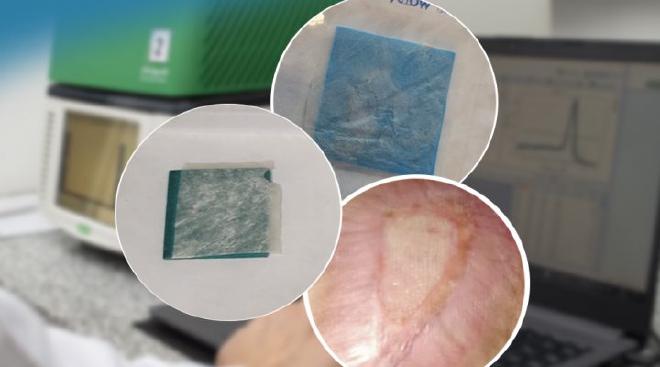
La membrana amniótica es la capa que cubre la cara interna de la placenta. Cuando este órgano temporal es descartado tras el parto, se convierte en un residuo biológico cuyos tejidos, procesados y conservados, son capaces de reutilizarse con fines medicinales gracias a sus probadas propiedades antiinflamatorias y regenerativas. Es por eso que este material de la placenta es extensamente usado a nivel mundial para diversos tratamientos de reparación de tejidos, con aplicaciones que van desde lesiones oculares u odontológicas hasta heridas complejas de la piel.
En un artículo firmado por Marcelo Gisande, del CONICET, se explicó que *recientemente, un equipo de investigación del CONICET, integrado por profesionales del Instituto de Estudios Inmunológicos y Fisiopatológicos (IIFP, CONICET-UNLP-asociado a CICPBA) *y la Unidad 4 del Centro de Medicina Traslacional (U4-CEMET, HEC), contribuyó a verificar la eficacia del uso de parches o apósitos derivado de membrana amniótica para el tratamiento de heridas complejas, al lograr el cierre total de una úlcera recalcitrante y una exitosa regeneración de tejidos en el caso de un paciente oncológico que se encaminaba a una intervención quirúrgica. Los resultados del procedimiento fueron comunicados en la revista científica International Journal of Molecular Sciences.
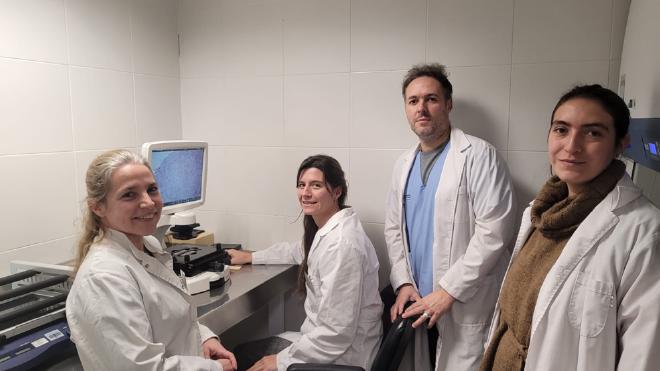
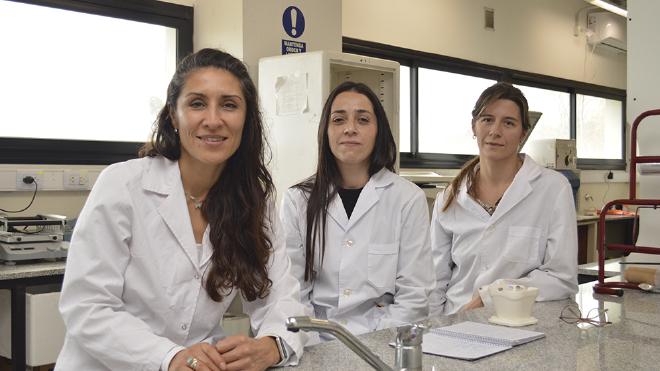
En un momento, el equipo médico encabezado por Jimena Rodrigo, integrante del staff de Cirugía Plástica del Centro de Educación Médica e Investigaciones Clínicas “Norberto Quirno” (CEMIC), donde se atendía el paciente –un varón adulto–, le ofreció la posibilidad de tratar una parte de su herida con un apósito de membrana amniótica humana, y aplicar en otro sector de la lesión un producto comercial –una matriz de colágeno de origen animal, particularmente bovino– habitualmente utilizado para preparar el terreno para los injertos, dejando abierta la alternativa de avanzar con esa intervención en caso de que el procedimiento con el parche no tuviera una evolución positiva.
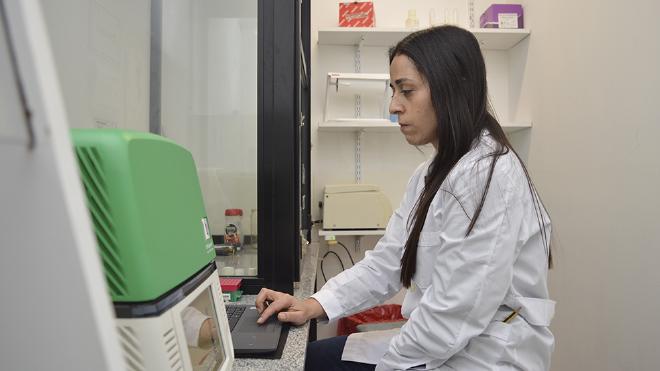
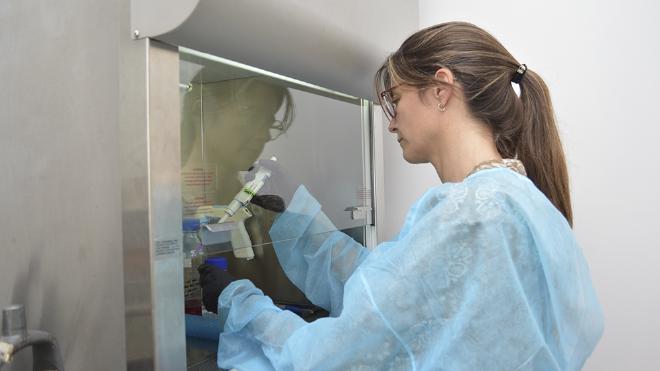
“En AMNIOSBMA procesamos la membrana dentro de las primeras 24 horas desde el alumbramiento de la placenta. En ese procedimiento, la esterilizamos y liofilizamos, es decir le extraemos toda la humedad. La membrana tiene un montón de factores biológicos que al cabo de 72 horas comienzan a decaer. Al liofilizarla, logramos que esos factores queden, de alguna manera, detenidos. Como, en general, los parches o apósitos que producimos se utilizan en heridas exudativas, al aplicarlos sobre ellas ese exudado rehidrata la membrana y genera una liberación sostenida de esos factores favorables. Es decir, de algún modo, esa humedad de la herida reactiva sus propiedades”, añadió Mariano Berra, director técnico de la ONG.
Transcurridos 49 días, la superficie tratada con el apósito de membrana amniótica tuvo una evolución mucho más favorable que aquella en la que se había aplicado la matriz de colágeno de origen animal. “A simple vista, se pudo comprobar que la piel circundante a la herida había avanzado sobre el seno de la úlcera mucho más rápido, y la coloración y el tipo de secreciones, además de la reducción de la actividad inflamatoria, dieron indicios de que el tratamiento con la membrana estaba funcionando mejor”, explicó Guerbi. “Entonces, al ver esa diferencia a nivel macroscópico de la evolución de ambas zonas, se optó por continuar el tratamiento con membrana amniótica sobre la totalidad de la herida hasta su cierre completo”, agregó. El proceso total que implicó la reepitelización, o reparación cutánea, duró cerca de 5 meses desde el comienzo del tratamiento.
“En las capas más superficiales, la maduración del nuevo tejido era equivalente en ambas regiones, tanto en la que recibió originalmente la membrana como en aquella en la que se aplicó al cabo de los 49 días. Eso era lo esperable. Por el contrario, en capas más profundas se vio una maduración más homogénea y en menor tiempo bajo el tratamiento con membrana. La correlación entre ambas técnicas da indicios de esta mejor maduración”, puntualizó Guerbi. Además, el equipo observó que en la zona en la que se aplicó la matriz de origen animal se desató una reacción de tipo “cuerpo extraño”, es decir un rechazo al compuesto utilizado, y se mantuvo una persistencia de los procesos inflamatorios, algo que no ocurrió en la región en la que se aplicó la membrana amniótica. “También se evaluó la vascularización y la angiogénesis, es decir cuántos vasos sanguíneos hay y cuántos vasos nuevos hay, respectivamente. Se vio un proceso de angiogénesis activo, es decir que se comenzaron a generar nuevos vasos bajo el tratamiento con la membrana”, remarcó Moreno.
“Cuando hablamos de medicina traslacional hablamos de dos mundos que tienen que conectarse y dialogar: el de los pasos y las metodologías de la investigación científica y el de la medicina, con la complejidad de cada paciente. Aquí se logró trasladar el conocimiento generado en el laboratorio, pero atendiendo a la necesidad del paciente de buscar una alternativa a los tratamientos convencionales que no habían funcionado, sin llegar a la intervención quirúrgica”, apuntó Moreno. Berra, en tanto, describió un círculo virtuoso que comenzó con la reutilización de un material biológico descartable, de cualidades probadas para su uso clínico, que continuó en el “frente de batalla”, donde médicos y pacientes se encuentran ante casos concretos por resolver. “Y eso, a su vez, luego vuelve al laboratorio, donde tenemos que tomar nota de aquello que funciona y estudiar qué factores hacen que funcione. Todo esto es fruto de un combo de diversas tareas interactuando entre sí de manera interdisciplinaria y fluida”, precisó.
“Con todo el marco regulatorio aprobado para el uso en humanos a nivel nacional, y cumpliendo con la normativa europea para lo que es un banco de tejidos, hemos podido construir un puente sobre el valle de la muerte que a veces se le presenta a los investigadores e investigadoras para trasladar un desarrollo científico hacia su aplicación clínica. En este caso, ya sorteamos esa etapa”, subrayó Berra, y concluyó que “demostramos el potencial de los derivados de membrana amniótica como una alternativa regenerativa, y ahora nos encontramos evaluando la mecanística de ese proceso, es decir por qué y cómo funcionan estos tejidos de regeneración. Vamos optimizando un método que en un futuro cercano se podría hacer de manera completamente ambulatoria, en el propio hogar del paciente”.
Cita #
-
Guerbi, M. X., Rodrigo, J. M. D. P., Rotela, M. F., Comito, R. A., Vogel, E., Portiansky, E. L., … & Michelini, F. M. (2026). Human Amniotic Membrane Dressing as a Non-Surgical Alternative for Extensive Chronic Ulcers: A Comparative Case Study. International Journal of Molecular Sciences, 27(11), 4655. DOI: https://doi.org/10.3390/ijms27114655
-
Human Amniotic Membrane Dressing as a Non-Surgical Alternative for Extensive Chronic Ulcers: A Comparative Case Study by María Ximena Guerbi, Jimena María del Pilar Rodrigo, Matías Fabián Rotela, Rocío Antonella Comito, Esteban Vogel, Enrique Leo Portiansky, Alejandro Berra, Griselda Noemí Moreno and Flavia Mariana Michelini*, Centro de Medicina Traslacional, Hospital El Cruce (CEMET-HEC), Florencio Varela 1888, Argentina, Comisión de Investigaciones Científicas de la Provincia de Buenos Aires (CIC-PBA), La Plata 1900, Argentina. Instituto de Ciencias de la Salud, Universidad Nacional Arturo Jauretche, Florencio Varela 1888, Argentina. Centro de Educación Médica e Investigaciones Clínicas “Norberto Quirno” (CEMIC), Buenos Aires 1425, Argentina, Servicio de Anatomía Patológica, Hospital El Cruce (HEC), Florencio Varela 1888, Argentina, Laboratorio de Imágenes (CONICET-UNLP), La Plata 1900, Argentina, Banco de Tejidos MNIOS-BMA, San Martín 1650, Argentina, Consejo Nacional de Investigaciones Científicas y Técnicas (CONICET), Buenos Aires 2290, Argentina, Instituto de Estudios Inmunológicos y Fisiopatológicos (IIFP-CONICET), La Plata 1900, Argentina, * Author to whom correspondence should be addressed. Int. J. Mol. Sci. 2026, 27(11), 4655; https://doi.org/10.3390/ijms27114655 Submission received: 1 April 2026 / Revised: 22 April 2026 / Accepted: 24 April 2026 / Published: 22 May 2026 (This article belongs to the Section Molecular Pathology, Diagnostics, and Therapeutics)
Contacto [Notaspampeanas](mailto: notaspampeanas@gmail.com)